Thursday, February 12, 2015

How can I experience that God heals my psychical wounds?


Many people tell me that they have asked God for a long time to heal their psychical wounds, they have seriously prayed for this, and nevertheless they have not noticed any healing. What might be the cause? Of course there can be plenty of them, but the most frequent one is that we expect from God something quite different than what we can get from Him.

A psychical wound always involves that our desire for love has been injured in some way, and as adults we are longing for the love we did not receive as children. We desire to be loved as if we were babies or little children. When we think about God’s healing our psychical wounds, if we really look into ourselves, we have to see that we, in fact, expect Him to fulfill this injured desire for love. However, if He fulfilled it, then He would lock us in this injured condition, and this is why He does not do it.

In order to experience God’s healing, we have to renounce this injured form of love. However, as we believe that this injured form of love is the true love, therefore we think that once we renounce it, we also renounce love itself. But of course we don’t have to renounce love; on the contrary! We only have to renounce its injured form shaped in us by our childhood injuries.

This is quite difficult. Mainly because when we have to renounce the injured form of love, we have no or only very little experience of what would be its healthy form. In this case we have to do an act of trust (that is, faith): that although I do not know what the good I’d receive would be, nevertheless I renounce this bad one.


The other great difficulty is that we want God to change our feelings, to stop us being anxious, to make us more relaxed, to give us warm feelings, and so on. However, feelings are only indications of a much deeper trouble, so basically what we want of God is as if we asked the doctor to just relieve the symptoms, and do not address our real disease. But God – as a good doctor – do not just want to administer some antipyretic, but to really heal our disease. Therefore, instead of healing our feelings, He usually starts to heal us at our spiritual level: He enlightens our intellect and strengthens our will in the good. He heals the deepest cause of our injuries, our injured relationship with Him, and the symptoms, our psychical injuries will cease in consequence of that.

However, the enlightenment of our intellect and the strengthening of our will in the good cannot be felt as clearly as the ceasing of an anxiety or as a warm feeling. Therefore one is usually not aware of this change, especially not in the beginning. Only when looking back from a longer distance, you can determine that you have become firmer in the good and that you see many things in a different way. At the same time, people usually experience a growing inner strength, stability and peace (which does not mean that they would have no more emotional swings, but they will increasingly have an interior stable point which they do not lose in trouble either).

Another major difficulty of this process is that while this spiritual growth is going on, your injured desire for love does not cease automatically. And the dissatisfaction of this injured desire is a very painful experience. At this time one is usually filled with despair, and doubts God’s love and proximity. This is the point where we have to base our safety on the faith rather than on our injured feelings: on the faith that God loves us, He is there with us, and He knows which way to lead us, what would be the best for us. That is, we have to constantly live with this pain, and each time when we feel it, we have to re-affirm our decision that we renounce the satisfaction of our injured desires, and whatever we feel, we trust in God’s love. If we can make this decision, then we can also pay attention to what God is giving to us. Because He daily offers us a lot of things, and if we accept them, then He brings us closer to Himself by a smaller or a larger step.

To this, however, I think once we have to make the fundamental decision that God is the most important in our lives, and from then on the main question of our lives should be every day what to do for getting closer to Him. Exactly as in a human relationship we have to question what should I do to make my partner happy, how should I change in order not to hurt him/her, but to delight him/her. To this we must first get to know what our faith teaches about this, and what this teaching exactly means here and now, in my life – that is, what I have to do. And what I have recognized in this way, I really have to do. If it does not go enough, I have to find the reason: what did I misunderstand, what did I not do well and why, and so on. If I found it, I fix it. While doing so, I will understand new things, which will open up new directions, and by following them, more and more new ones. And so on – until the end of my life.

In this process, especially if I turn to Him with specific questions every day, I will experience His help. I will find some book that helps, a sermon which takes me ahead, I will see more clearly what I did not yet understand, I will receive forces to do what I consider good, etc. These small everyday steps will result in clearly seeing, when looking back, that I got nearer to God. I experience His help in these helps. (This is also why you cannot accurately predict what you would experience, because this is always very personal.) And by this we are back at the beginning of the circle: that we have to renounce the injured form of our desire for love, we have to trust in God on the basis of our faith, and we have to start on the way of doing every day something for getting nearer to Him – and then I will experience that He also gives me something every day, and after a certain time I will be pleased to see in how many things I have been healed and that I achieved things which I would have not believed to be possible for me.

Wednesday, December 24, 2014

The Sea


This was the title of the book from which, more than thirty-five years ago, I first learned what the sea is. In the propaganda novel of Klára Fehér a little girl, thanks to the takeover of the Communist Party after 1945, becomes a successful medical researcher. The transcendental climax of her internal transformation following the external one is when Ágnes first catches sight of the sea about which her grandmother told her in her childhood:

“…And then her grandmother always stood up from the bench, she shuffled with heavy steps into the kitchen, and she lifted down the picture hanging on the wall above the iron bed.
It was an unframed card, a printed color picture. The sea.
A light blue, unclouded sky, a smooth, azure water surface. At the meeting of sky and sea, a snow-white ship, and a fresh green palm leaf emerging mysteriously from somewhere in the infinite blue.
– The sea – the old woman said solemnly. – Look… it nowhere has a coast, the sea is infinite, it reaches the stars…”

“…The sea is green as the molten glass, cheerfully slamming the shore. The children ride its foaming waves with rubber animals. Ágnes runs into the hot, salty water, she is swimming on the splashing waves, she is exulting, she is drunk with joy. Well, this is the sea, then!
Wherever she sees, sky and sea are embracing each other. The infinity is color turquoise, and at the edge of the horizon a little white dot: a ship. She is swimming, swimming on the emerald water, and she sees herself, the image of her childhood, her grandmother, the picture above the iron bed covered with a coarse blanket. The colored postcard: sea, ship and palm tree. If there is happiness, then she imagined it always like this.
…She cannot part with the water. She goes to the shore, sits on the rock, lies down on the sand, and lovingly looks the infinite water. By midday the sea becomes dark blue, a smooth, dark blue mirror, no ripple disturbs its surface. In the afternoon it suddenly starts to wave, it becomes gray-brown, rough, inscrutable. At dusk it is dark green as the rocks, only at the horizon it is red, where it bathes the sun.
What if she remained motionless on the shore, if she kept sitting here on the rock, watching the swaying giant until she would feel dizzy and would fall into it… what if she now set on running toward the depths?”


I thought much about the sea. In the early eighties, during a student exchange program, our university team went to the Netherlands. On a cold, rainy autumn afternoon they took us to the sea. I could not move away from the coast. It really was infinite. Not that kind of stupid infinity like one plus one to the infinity. But infinitely vast, complex, vivid and beautiful. And one could play with it. I went to the edge and at every swell I tried to stand to the farthest point where it would come out. The Dutch did not understand it and they indignantly pushed me, soaking wet as I was, into the bus.


Not long after, my friends from the Yugoslavian Vojvodina took me to the Adriatic Sea. We went to places where there was hardly any tourist. I was lying on the shore of a small island. All was filled with the smell of resin. No person was around me, only the sea. I felt someone watching me. As I turned back, deers were staring at me from the pine groove. One of course knows that the sea is not infinite, but its beauty is so many-sided and so intensive that this knowledge does not matter. This beauty even raises you above the inevitable terror of experiencing your own limitations. And no matter how few you are able to receive of it, by way of that you will connect yourself with the sea.

From then on, I dreamed of the sea and longed for the sea.


Twenty years ago I was converted. The infinity has opened for me. Some years ago I noticed that the sea is not so painfully lacking any more. Nevertheless, the things that refer to the person beloved will always remain dear to us.


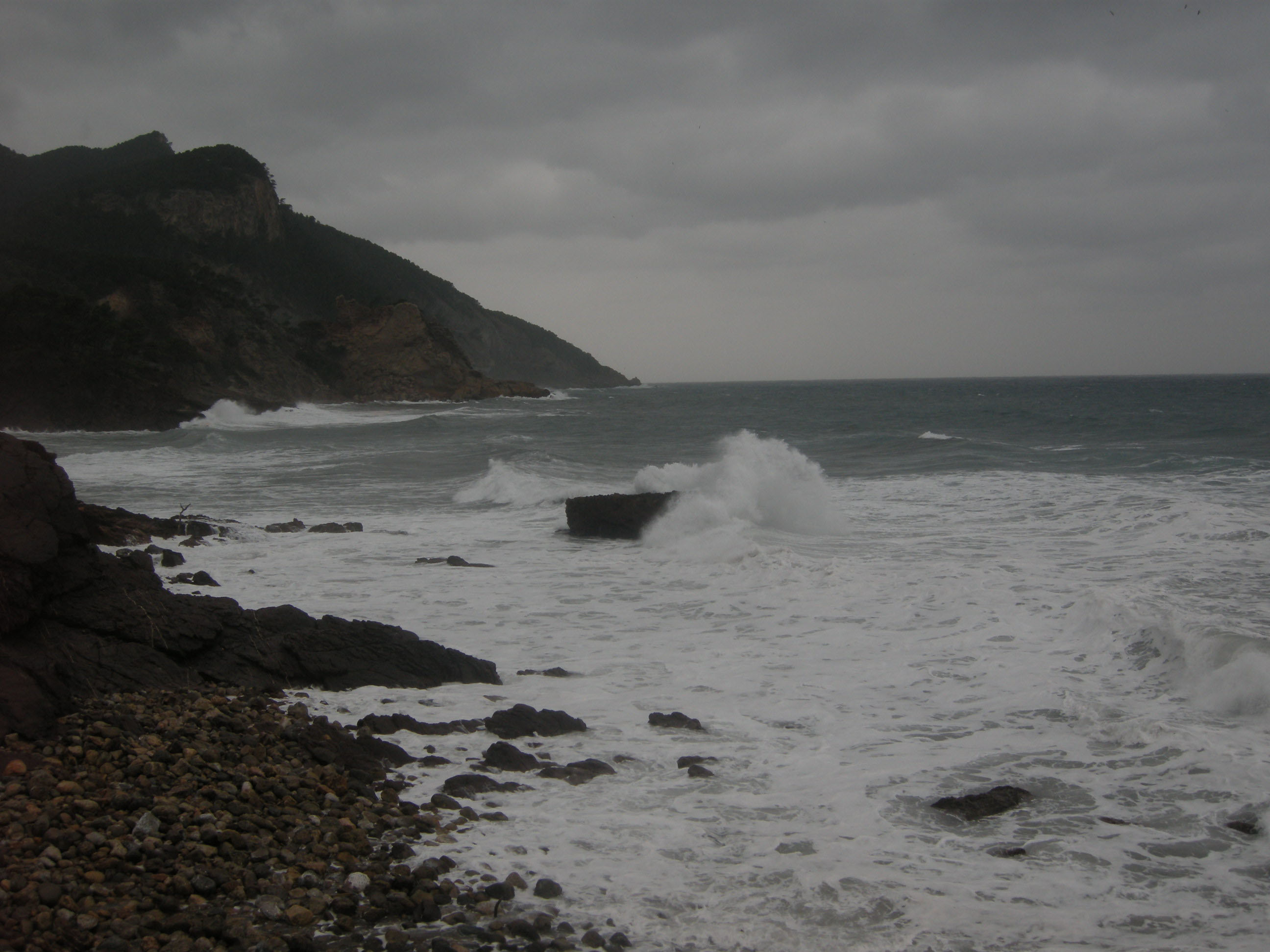
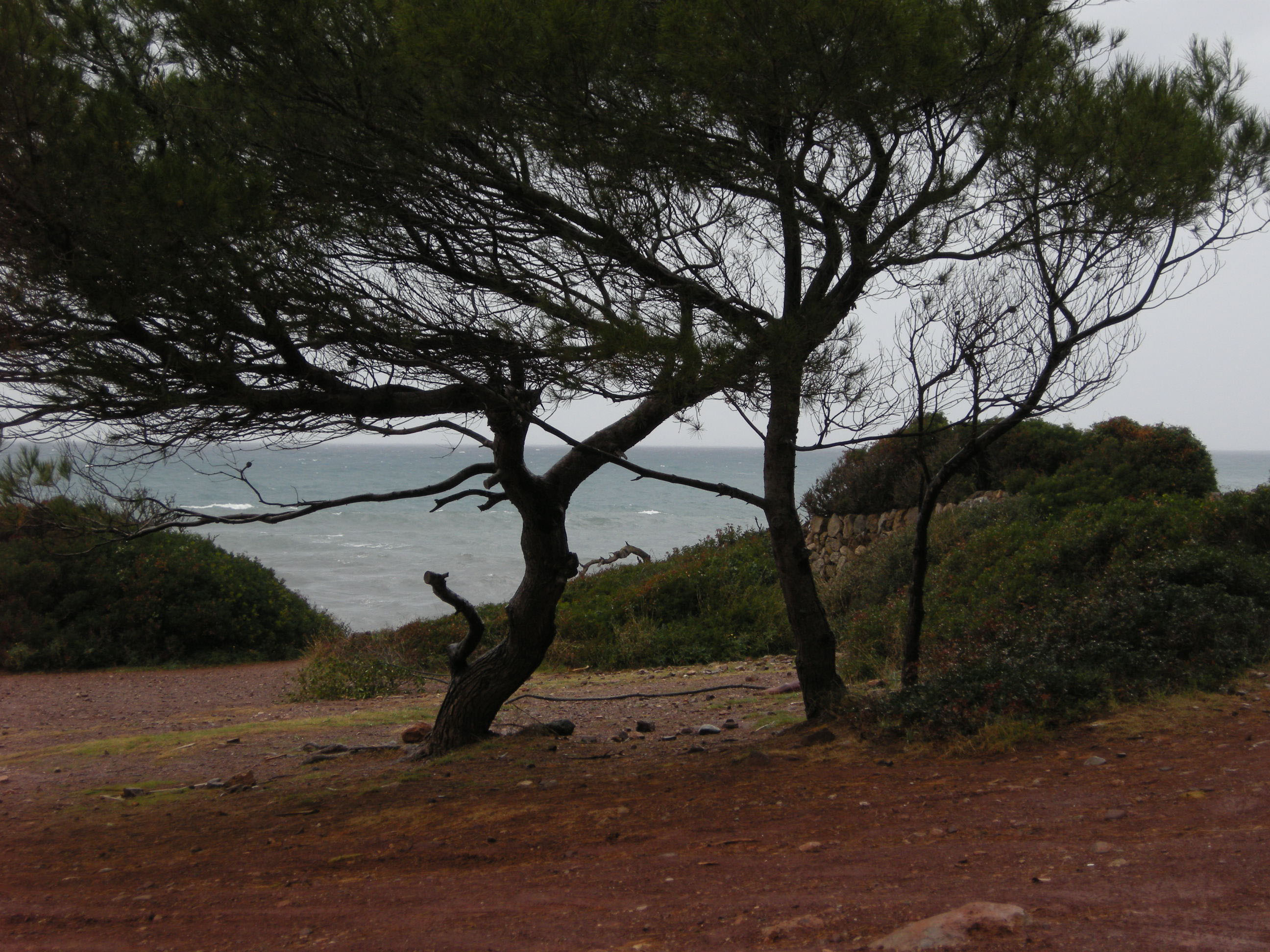
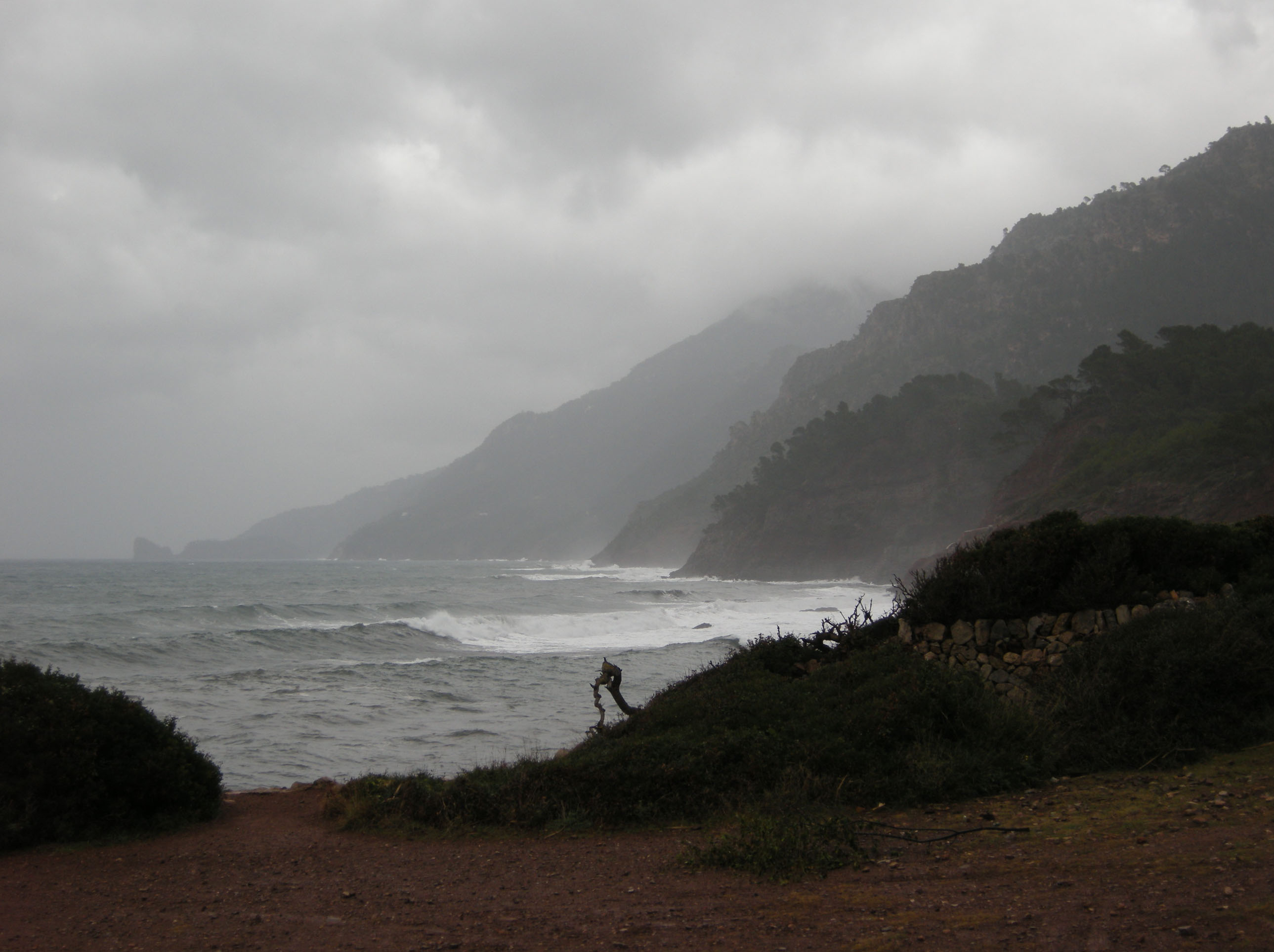
These pictures were taken just a year ago on the shore of Port d’es Canonge in Mallorca. Not far from here, in the seashore cathedral of Palma within some minutes – just like every Christmas night since seven hundred years – the medieval Song of the Sibyl will resound.


El Cant de la Sibiŀla, Mallorca. Jordi Savall, Montserrat Figueras, La Capella Reial de Catalunya, 1998 (36'50)

Wednesday, October 15, 2014

The diseases of Saint Teresa of Avila


 Shortly after entering the Carmelites, Teresa takes on – no one else was able to do it – the care of a sister, who “…at that time had a very great disease, and a very painful one, because she had holes in her belly so that whatever she ate immediately came out of her. She died soon afterwards. I saw that everyone was afraid of this disease, but her patience caused great envy to me. I asked God to give me such a patience, and then to give me diseases so I could serve Him.1 This idea is not new. Already as a child she tried to escape with his brother to the land of the Moors to suffer and die there for God. 2

Little is known before this offering about the diseases of Teresa. We know none from her childhood. At the age of sixteen she had to be taken home from the college, because of some major illness, according to her own words, 3 but they did not note down what it was. Her first disease specifically known to us is in the next year when, after terrible inner struggles, she decides to choose the monastic vocation. While she hesitates, she is repeatedly attacked by bouts of fever and fainting. 4

Since when she asks God for diseases so she could better serve Him, all her life passes among terrible illnesses and pains. 5 Shortly after her request she starts fainting again, she is diagnosed with cardiac trouble, and she is taken to a healer. This latter tries to heal her by subjecting her liver, spleen and stomach to a brutal cleaning treatment. This insane cure probably dehydrated the organism of Teresa who was finally taken home with unbearable pains, constant fever, ruined nerves, unable to eat and to sleep.

 Three months later, on 15 August 1539 in the night all signs showed that she was died. Requiem was celebrated for her, and in the monastery the tomb was opened for her body. Her father, however, despite the August heat, did not let her bury. He was kneeling at the foot of her bed, he could not be torn from there, he was praying and repeating that his daughter is not dead, that she was not born to be buried in this way. Four days later Teresa started to recover consciousness. She asked why she was called back when she was already in the heaven and she saw the hell, that her father and some religious sisters, for example her friend Juana Suárez need to be saved by her help; that she saw the monasteries she would establish and what she must do for her order; the souls that would be saved through her; that she would die as a saint and before being buried, her body would be covered by a shroud of brocade. Everyone was convinced that she was delirious. 6

When she fully recovered her consciousness, she could move only one finger. All her body was completely stiff, every touch was a horrible pain, every second day she was tormented by fever. She spent eight months in this condition. Three years later she asked Saint Joseph to intercede for her healing. After that she gradually regains the ability to move. However, all her adult life was accompanied by various symptoms of paralysis. Her left hand is paralyzed from time to time, occasionally even for two years. Finally on Christmas of 1577 she breaks it irreparably: she cannot take care alone of herself any more. She has regular paralyses in her limbs for several hours, accompanied by strong pains. Her tongue is paralyzed again and again, she cannot eat and speak. She experiences these in particular during the terrible foundation of Burgos. The one thing that can help her in this condition is the Holy Communion.

 These pains are associated with various other diseases. A continuous, severe headache and frequent trembling of the head. Severe pains in the jaw. Her teeth are completely ruined, causing her immense pain. Her stomach is so bad that throughout two years she vomits bile even daily. Intensive pain and palpitation in the heart. The recurrent fever remains with her throughout her life. Fainting. Ruined joints and bones. Gout. Pain in the back. Problems with the liver and kidneys. The pains gets stronger in the last years of her life. Shortly before her death, at the age of 67 a medical examination cannot determine the center of the pains, because “all the body is a repository of diseases”. Her death is caused by a very strong internal bleeding – according to a plausible hypothesis, as a last phase of a uterine metastasis.

Teresa bears all this with an incredible patience from the beginning to the end. Meanwhile she establishes two men’s and fifteen women’s monasteries which, in spite of the several waves of the terrible persecutions of church in Spain, all have survived to this day. She writes one of the most important works on mysticism of all times, and a half dozen more of outstanding books. Despite the fact that in the course of the fighting within the order many of her letters were burnt, nearly four hundred and fifty of them have been left to us. She plays a key role in the reform of the Carmelite order, probably one of the most difficult reforms of church history.

These facts are usually interpreted in three ways. It gives a very sad diagnosis on the last century that in the Catholic discourse on Teresa’s diseases almost exclusively the first two are present.

For a long time – and especially with the surge of twentieth-century science – the most popular interpretation was the one offered by psychopathology. This builds on the brilliantly simple hypothesis that on psychological grounds everything is possible, thus the physical problems of Teresa were but manifestations of various psychical problems. This seemed extremely plausible to a general public that grew up with a vulgarized Freud, for whom Teresa was but a hysteric – this word is familiar for all this trend –, neurotic, and even psychotic. This explanation has the big attraction that the mystic who resists to be fitted into theoretical or practical materialism, can be immediately filed with a specific and tangible label: psychopathology (whose experts thus, incidentally, also gain one more field where they are competent because of their science). Despite all these benefits, this kind of explanation has the problem that not everything is possible on a psychological basis, and that a diagnosis which judges the person on one or two symptoms uprooted from the context, is a kick in the ass of psychology as a science. Because fainting, convulsion or paralysis is in fact possible in a number of psychological diseases. But each of these diseases are accompanied by typical ways of problem solving, patterns of thought, relationship to reality, stress management, stress resistance, self-concept, self-force and relationship patterns. The bulk of psychology as a science is made up by the description of them and the explanation of their relationships. Seen from this point of view – and if we want to take seriously psychology as a science, we cannot see it differently – Teresa with all her fainting, convulsions and paralysis is a quite exceptionally healthy personality, with an incredible self-force, an amazing stress resistance, an awesome sense of reality, and extraordinary conflict management skills.

 Since the psychopathologic explanation is so embarrassingly weightless, the more informed usually choose the biological one. This seems much more respectful to Teresa and the whole subject, but in reality the process and its result is very similar to the previous one. The prominent representative of the science takes a couple of symptoms, on the basis of which he states that the problems of Teresa were caused, let’s say, by lung disease, or some kind of bacterial infection – the more inventive researchers even tell you exactly which bacteria. (Interestingly, these are always such diseases and bacteria, whose knowledge offers to the reader the competence and pleasant feeling of belonging to an educated public.) And while the source of their prestige is the reference to science, they generously disregard the basic scientific rule that a hypothesis must explain all the facts of a subject, and if it is unable to do so, it should be rejected. And they do so with a good reason, since in the history of Teresa’s diseases there are more than one fact – for example the paralysis which is ceased by the Communion – that per definitionem cannot be explained on scientific grounds. According to the rules of science, one should say that such phenomena unfortunately do not belong within the sphere of competence of science. If instead of this one creates a so-called scientific explanation, this does not only mean that he is scientifically incorrect, but also that his goal is to question the existence of the supernatural. If some bacteria explain the problems of Teresa, then there is no need of any further explanation, including the eventual participation of God.


 Thank God, there are a few others as well, who are not selling the apparently most marketable stuff in the various fairs of expertise, but watch in an awe the terrible secret that a six year old girl already wants to suffer and to die for God, renewing this intention at the age of twenty, and God accepts it. He takes her into the most terrible diseases, and He is with her to the very end. Thus Teresa is able to do everything. And while her body is full of inflammation, putrefaction and decomposition, she emits floral fragrance. And before taking her to all this – while they are preparing the tomb for the apparently dead Teresa –, He shows to her those works and those saved souls that will be the fruits of the suffering offered by her. 7

_______________________________________________________________

1 - Vida, 5.2 (V 5.2)
2 - Efren de la Madre Dios, O.C.D. – Otger Stegging, O. Carm.: Tiempo y vida de Santa Teresa. Biblioteca de autores cristianos. Madrid 1996. 36-37.
3 - V 3.3.
4 - V 3.7
5 - A detailed description of Teresa’s diseases and of the various attempts of explanation: Efren de la Madre Dios, O.C.D. – Otger Stegging, O. Carm.: Tiempo y vida de Santa Teresa. Biblioteca de autores cristianos. Madrid 1996. 109-134.
6 - Efren de la Madre Dios, O.C.D. – Otger Stegging, O. Carm.: Tiempo y vida de Santa Teresa. Biblioteca de autores cristianos. Madrid 1996.120.
7 - See on this: Reginald Garrigou-Lagrange, The three ages of interior life. XLIX. The life of reparation.

Sunday, October 5, 2014

Berlin, Stegliz, Saturday morning

steglitz steglitz steglitz steglitz steglitz steglitz steglitz steglitz steglitz steglitz


Ion Ivanovici (1845–1902, born in Temesvár/Timișoara, Serbian bandmaster of a Romanian military band): The Waves of Danube, in the Hungarian version by Pál Szécsi: A single bluebell

Thursday, January 30, 2014

How can one pay attention to anything else besides Him

 Contemplative orders prescribe to all their members, from the youngest novice to the oldest monk as a basic exercise to stay always in the presence of God.

Thomas Merton complained a lot that he was unable to stay in the presence of God and do intellectual work at the same time.


I think Merton never was really in love.
When one is deeply in love, then after going home from an encounter and beginning to take care of his own job, he does not continuously think about his love, but does his job. Nevertheless, love completely fills him. He does not oscillate between love and work, but he is absolutely filled with love while working.

This is very similar to what happens to one who works in the presence of God: his will is focused on his love, while he carries out his work with his intellect

Tuesday, November 12, 2013

Game


At the terminus a Gypsy man and woman with three children stood next to me. They were around twenty-five or thirty year old. The features of the thin, small man were so tense and he was so painfully organized even in shorts as a mafioso in an Italian Neorealist movie. The woman was somewhat sloven, already a bit plump, but still girlish. They stood silent, embarrassed. The bus came. The man handed over the boys to the woman and was about to leave. The boys were clasping in their hands the little games they obviously got for the occasion. The woman, still clinging to the presence of the man, threatened them that if they will not be good, she would take their games away. The boys pulled themselves together a bit. – How long must be good? – asked one of them. – For a long time! – the woman replied without hesitation. The little boy looked at her, expecting to know for how long exactly. The woman thought for a moment. – All your life.

Sunday, March 17, 2013

Sursum corda

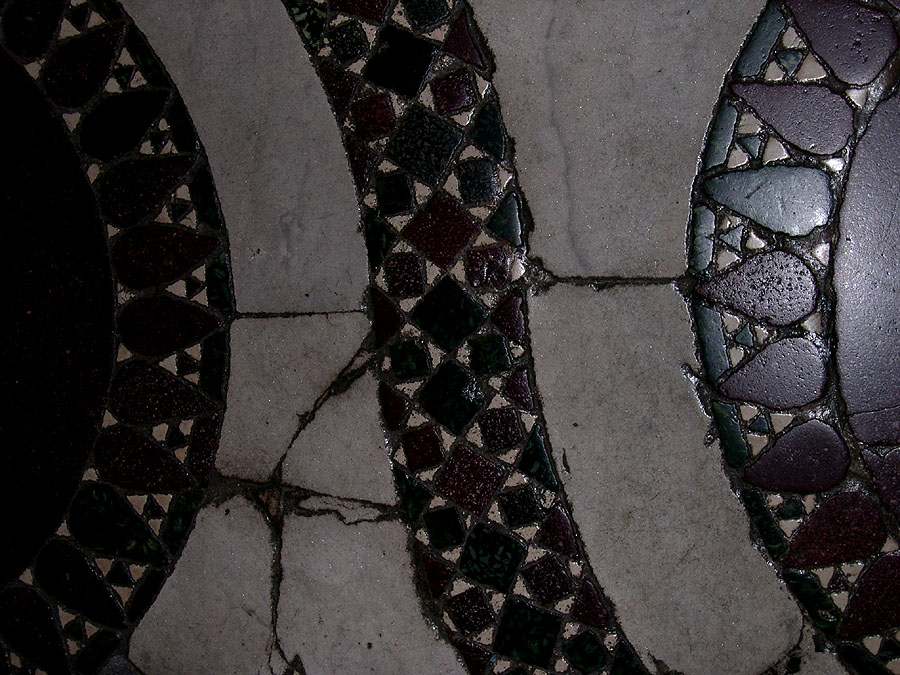
Detail of the floor mosaic of Santa Maria Maggiore in Rome
dedicado a Wang Wei quien sabe
que también entre los pucheros anda

In one morning in the spring of 1977, in the high school „Margit Kaffka” – some decades earlier and later „Holy Margaret” – the teacher responsible for the mobilization of the Communist Youth Association went round the classes. He was inviting people for the folk dance instruction of the Torch Folk Ensemble in the afternoon.

The group was going to start a dance house on the model of the already popular Hungarian folk dance houses, where they were going to teach the dances of the Serbian, Croatian, Bulgarian, Greek and Macedonian ethnic minorities. They were going round the high schools of Budapest for recruiting participants.

Our school was visited by the wife of the ensemble’s leader Antal Kricskovics. She was an extraordinary beauty. Apart from her really exceptional appearance, she owed this also to her majestic bearing.

She arranged us in a circle and immediately started the instruction. We draw our stomach in, trust the chest out, press the shoulders down. Our back is tight, but the hip and the limbs move easily and flexibly.

If you do all this, you immediately begin to breathe with full lungs. This was not customary in those times. The majority of Hungarian society compromised with the political system. People sought after momentary survival, small advantages, permitted little joys. They went about humped, they took shallow, gasping breaths.

After we clarified the necessary bearing, she taught us the song “Makedonsko devoiche”, and then she started to teach the steps. Not only the bearing was majestic, but the song and the steps as well.

Now as I’m writing this, I look over what sorts of music were available at that time. And I see that almost exclusively those that matched a convulsively disciplined and limited, sentimental and sensual taste of the petty bourgeoisie. Those which, even if they touched something majestic, only did so in order to pull it down to this vulgarity. “Goodbye, my sweet Piroska, there are even more beautiful girls than you.” Two steps to the right, two steps to the left. The musical indoctrinations of compromise, momentary survival, small advantages and permitted little joys.

At that time I did not know anything about the subtle and intricate rhythmic structures of Balkan and Greek music, neither that I was encountering a tradition that had been preserved since the ancient Greeks. There was no live music, not even a tape recorder, only ten or fifteen teenager girls coming together by chance and singing “Makedonsko devoiche” – and my heart rose up.

And that dance… Ten years later, on a warm summertime Sunday afternoon the wandering tambura-player arrived in the small Southern Hungarian village, at that time already inhabited only by Gypsies. He played kolo for some pennies. Immediately a great flock gathered around him, and everyone was watching him with great yearning. The man who counted as a chief came out from his hovel, accompanied by his two wives. None of the two was older than thirty, but they were already old women, tormented, bowed and emaciated. The man gave over the money with a theatrical gesture. One woman stood to his left and the other to his right. The music started. They began to dance the kolo, with a tight back, but with a loose hip, easily and flexibly. Their dance was characterized by a peculiar dignity, not canceling, but embracing their misery. Like the hand of the resurrected Christ the traces of the wounds.

At that time, in that spring afternoon of 1977 I did not know anything about Christ either. But as I pulled myself out and held on to the others, my heart rose up. I was touched by that peculiar dignity that cannot be canceled by any misery.

At the end of the instruction the wife of Kricskovics announced that the first dance house will be held in the House of Culture on Sunday afternoon. Of course I went there.

In the thereafter following two years I lived from Sunday to Sunday. I went to the dance house of Kricskovics like a believer goes to Mass. These dances let me, the atheist, experience the sacred through my own body.


In the lack of authentic folk music, let us listen to one of my favorite songs of those times: the “Highwayman Ilju”, a Macedonian-inspired poem by the great Hungarian poet László Nagy, performed by the old Kolinda group (1977!). I do not know what route took them to the point of perceiving and transmitting the transcendence inherent in this music – their singer Ágnes Zsigmondi, for example, was an offspring of the Communist political establishment just like me –, but I do not know any other musical group coming anywhere near to them. I think this was one of the reasons why they, while being highly successful in Western Europe, could not publish a single record in Hungary.


Kolinda, Ilju haramia (Highwayman Ilju), from the LP “Kolinda II”, 1977 (poem by László Nagy)

Hey how they’re gathering to go to war
Hey how they are gathering
The pagans of Kochan
Mother, my sweet, the pagans of Kochan

Hey how densely they are coming, my sweet
Hey how densely they are coming
To the wide water of Kriva
Mother, my sweet, to the wide water of Kriva.

Hey how they would like to put in irons
Hey how they would like
Highwayman Ilju
Mother, my sweet, Highwayman Ilju.


Hey but Ilju is not there, my sweet
Hey Ilju is not there
At the wide water of Kriva
Mother, my sweet, at the wide water of Kriva.

Hey Ilju is having a merry time, my sweet
Hey he’s having a merry time
In the city of Solun
Mother, my sweet, in a good cool tavern.

Hey he is served, my sweet
Hey he is served
By a beautiful Macedonian girl
Mother, my sweet, by a beautiful Macedonian girl.
Hej de, gyűlnek hadba, édes,
Hej de, gyűlnek hadba
Kocsáni pogányok,
Anyám édes, kocsáni pogányok.

Hej de, sűrün jönnek, édes,
Hej de, sűrün jönnek
Széles Kríva vízhez,
Anyám édes, széles Kríva vízhez.

Hej de, vasra vernék, édes,
Hej de, vasra vernék
Ilju haramiát,
Anyám édes, Ilju haramiát.


Hej de, nincs ott Ilju, édes,
Hej de, nincs ott Ilju,
Széles Kríva víznél,
Anyám édes, széles Kríva víznél.

Hej de, vígad Ilju, édes,
Hej de, vígad Ilju,
Szolun városában,
Anyám édes, jó hűvös ivóban.

Hej de, néki szolgál, édes,
Hej de, néki szolgál,
Széplány, makedonka,
Anyám édes, széplány, makedonka.

Now as I’m listening to it, this song even thirty years later asks me whether I’m living with a heart rose up enough. Perhaps I will write more about them.

Saturday, November 24, 2012

Kerchiefs, kerchiefs, kerchiefs ...


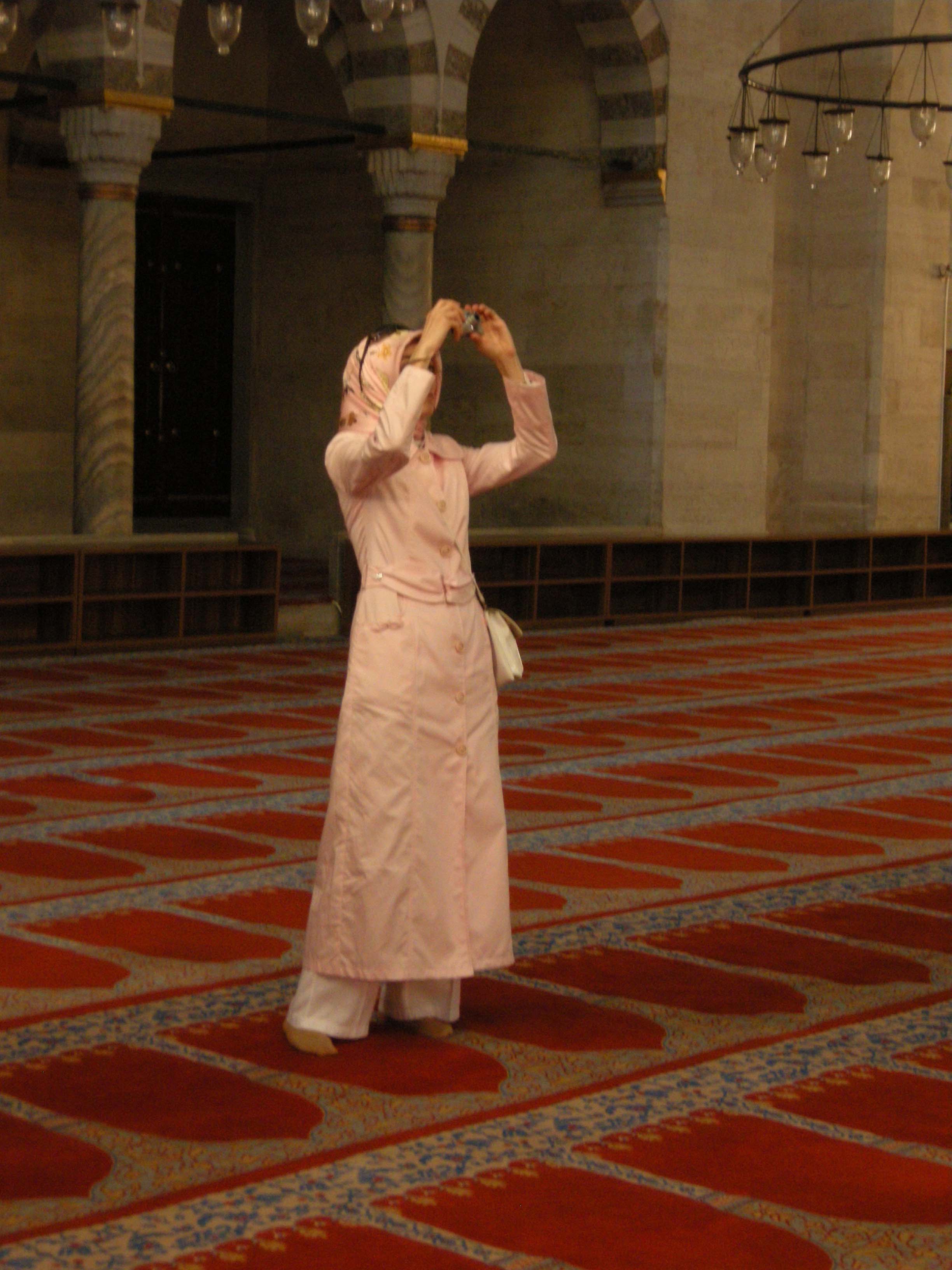
in all quantities, sizes, shapes, colors. The very first thing one encounters when exiting the arrival hall of the Istanbul airport is the poster of the Armine fashion company showing a very pretty young woman with a kerchief. And from then on the whole city is full of little, small, huge and giant posters, and on the posters wonderful women with kerchiefs. And not only on the posters. By the time I arrived to the inner city, I was completely enthusiastic. Kerchiefs became a fashion in Istanbul.


Der makām-ı Şūri Semâ’i (Mss. D. Cantemir 256). Savall: Istanbul, 3'33"


Four years ago we set out from here to Persia where I was completely fascinated by what an incredibly sophisticated fashion can be pursued with the strictly regulated black chador. The kerchief costume of Istanbul, on the contrary, had not made any particular impression on me, and it did not seem to be very different from what is usual at us.


Now, however, it is immediately striking how many women wear a kerchief. Not only the elder and the poor, but also the young, the obviously affluent and highly educated women wear it in mass, from the veil covering even the eye to the highly artistic and extravagant compositions. And they seem to find a great joy in it


Among the young people it is undoubtedly the Armine company to determine the trend: discreet, subtle pastel tones and floral patterns, natural, soft materials. They do not sell only kerchiefs, but whole collections, dresses, accessories, everything harmonized with everything.


In addition, there are many, not only young people but also elder women who, taking full advantage of the wide range of possibilities, wear similarly sophisticated, but individually configured kerchief and dress compositions.


I guess I have never ever seen a fashion which would have showed in such a fabulous wealth and diversity in how many ways one can be pretty and feminine.


Tuesday, June 26, 2012

Why do I continue to have negative emotions, despite the fact that I pray for their disappearance?


 Many times we pray for the disappearance of our negative emotions, anxiety, fear and anger. God sometimes really helps in this. But not always. 1

Our emotions, just like our external senses (sight, hearing or sense of smell) have the task of showing us the external world, our feelings to and relationship with other people, so that we can act accordingly. Thus the negative emotions – similarly to the unpleasant sights, sounds and smells – are just as important as the positive ones, because negative emotions, similarly to negative impressions, always point to some danger. If during a journey we always looked at the beautiful sunset and did not see the abysses, we would never arrive at our goal.

Often this is the case with our emotions. In dangerous situations, our anxiety, fear and anger draws our attention to the danger.

A family wants to take out a very high loan which would burden them over their forces. Throughout the process of taking up the loan, the husband feels a very intense anxiety. He keeps praying for his anxiety to pass away, but it does not decrease. A middle-aged woman feels very strong anger toward her mother, who constantly wants to control and limit her. She asks God to free her from her anger, but it is not relieved.

The anxiety of the husband warns him the very serious danger that the loan is well above their forces. The anger of the middle-aged woman shows that in spite of her adult age she has not yet broken away from her mother, and has not yet formed her own life.
 
In such situations their request to let their negative emotions pass away is like when running toward the abyss we would ask God let us see only the beautiful sunset. In such cases we ask in fact that in a dangerous situation which we ought to solve, we should not do anything, and while we are heading for the disaster, we would even feel very well.

Therefore, if heading for the disaster is not what we want to do, then if God does not relieve our negative emotions, then we always should ask ourselves what is wrong in our lives, to which these negative feelings refer.

______________________________________________
1. I have already written that we often do not experience God healing us because while we ask Him for healing, we in fact want our injured desire of love to be fulfilled, and if God gave this to us, then He would not heal us but rather fix us in our injuries.

Wednesday, February 8, 2012

Reginald Garrigou-Lagrange - on his life and his works on the web


Reginald (Gontran-Marie) Garrigou-Lagrange was born in France in 1877 and died in Rome in 1964.

He started to study medicine at the university of Bordeaux, but in 1897, under the impact of his deep conversion, he left the university and entered the Dominican order.

From 1909 to 1959 he taught fundamental theology and dogmatic in the Angelicum in Rome, and in 1917 he founded the first department of spiritual theology.

He has been considered the most important Thomist theologian of the 20th century. His achievement was particularly significant on the field of spiritual theology.

ON HIS LIFE ON THE WEB:

- Reginald Garrigou-Lagrange OP
- A Saint in Heaven
- The Last Battle of Garrigou-Lagrange
- Padre Gontran Garrigou-Lagrange
- Réginald Garrigou-Lagrange Il mostro sacro del Tomismo 

BIBLIOGRAPHY:

- Bibliografie P. Reginalda Garrigou-Lagrange OP
- Reginald Garrigou-Lagrange
- Fonti bibliografiche su P. Réginald Garrigou-Lagrange
- Tutte le opere di p. Garrigou-Lagrange 

HIS WORKS:

in English;
- THE THREE AGES OF THE INTERIOR LIFE.
- THE THREE WAYS OF THE SPIRITUAL LIFE.
- LIFE EVERLASTING.
CHRIST THE SAVIOR.
CHRIST THE SAVIOUR  - A Commentary on the Third Part of St Thomas' Theological Summa
- REALITY—A Synthesis Of Thomistic Thought.
- PROVIDENCE.
- THE TRINITY AND GOD THE CREATOR. 
- GRACE: Commentary on the Summa Theologica of St. Thomas. 
- Commentaries on the Summa written by Pere Reginald Garrigou-Lagrange, O.P.
- THE ONE GOD - A Commentary on the First Part of St Thomas' Theological Summa 
- PREDESTINATION
- The Priesthood and Perfection
- Excerpts from  fr. Garrigou-Lagrange OP
- Excerpts from Garrigou-Lagrange's commentary on De Eucharistia
- The Mother of the Savior
- Where is the New Theology Leading Us?

en français
- Les Trois äges de la vie Intérieure 
- La Mère du Sauveur et notre vie intérieure 
- La Providence et la confiance en Dieu
- L'Éternelle vie et la profondeur de l'Âme
- Les trois conversions et les trois Voies
- Le sens commun
- La synthèse thomiste
- La Mère du Sauveur et notre vie intérieure
- Articles:
  - La Royauté universelle du Christ
  - L'unique personnalité du Christ 
  - Le sacerdoce du Christ
  - Le Christ Chef mystique de l'Eglise 
  - Le Cœur eucharistique de Jésus et le don parfait de Lui-même
  - La Sainte Trinité en nous 
  - La Sainte Trinité et le don de soi
  - Les convenances de l'Incarnation et notre vie spirituelle
  - Le progrès spirituel en Marie
  - Du gouvernement royal
  - La joie d’être enfant de Dieu
  - La charité et les béatitude
  - L'efficacité de la prière
  - La Prééminence de saint Joseph sur tout autre saint
  - Comment  devons-nous nous abandonner à la Providence ?
  - Le Discernement des esprits 

en español
- Las tres edades de la vida interior
- La sintesis tomista

in italiano
- Sacerdote con Cristo
 Sacerdote e Vittima

Monday, December 5, 2011

Psychohorror

“Respect only what brings joy, energy and purpose into your life.
Then follow your way, the way of magic and dream.”

„Hypnotherapy and relaxation technics are attractive primarily to those clients
who are looking for trance experiences.”


(quotations from sites of psychologists
 recommended on pszichologia.lap.hu)

As a Christian psychologist, for a couple of years I have pursued a therapy which integrates the tradition of Christian spiritual guidance with the knowledge of modern psychology. In this September I have included a description of it (at the moment in Hungarian only) on my page, and startlap.hu link portal.

I have sent it as a recommended link to a dozen of pertinent psychological pages of the

When I had sent the links of my gardening pages to the respective subpages of the same portal, about 80% included them, while 20% refused them. The excuses of refusal were not very plausible, but well, not everyone must like my cheek and pages.

Now I expected more or less the same proportion. However, it turned to be quite different. A lot of page owners have not even replied, and among those eight who did, two included my link while the rest refused it.

First I did not understand the reason. And then I, like the vodka in the joke, decided to go out and check who is this Ivan Ivanovich who keeps refusing me.

I found the following:

Conflict management page:
“Dear Kata, thank you very much, I have included the link!”
1 esoteric link on the page – Both here and in the rest I only counted the explicitly esoteric links.
Parents page:
“Dear link recommender. Thank you for visiting my page and recommending your link. I have included it, but in terms of my editorial principles, I have placed it in a different box.”
5 - 10 esoteric links
Consultation page:
“Dear link recommender! The editor, in tems of the guideline concerning link recommendation, preferred not to include the link recommended by you.”
17 esoteric page and portal links
Health page:
“Dear link recommender! The content of the page recommended by you does not have the necessary amount or quality of information which would make it really useful for the users visiting the Health page. And as the Health page does not have in view to function as a complete and exhaustive link collection, therefore I am sorry to say that I cannot include your link between the already existing ones.”
16 esoteric page and portal links, with an emphasis on esotericism and homeopathy
Psychological aid page:
“Thank you for your recommendation, but the page proposed by you is no site, only a document (sic) which, in terms of the rules of our system, cannot be included in my page.”
50 esoteric page and portal links
Stress page:
“Dear link recommender! Thank you for your proposal. Although your web page is pleasant, however, I cannot accept it, because its topic does not match the page edited by me.”
58 esoteric page and portal links
Self-knowledge page:
“Dear link recommender! Thank you for your proposal. Although your web page is pleasant, however, I cannot accept it, because its topic does not match the page edited by me.”
66 esoteric page and portal links

All right. Now we already see who Ivan Ivanovich is. It is noteworthy that the better position he has, the more sneaky and insolent he is.

In the Consultation page he still clearly declares that he does not wish to include my page. I understand it well: if I opened a special section for esotericism, I would also not wish to include the link of a Christian on my page.

The editor of the Health page was impertinent enough to write about my exceptionally informative and well edited page (I can justifiably affirm this, after having visited the pages of several hundreds of psychologists) that it does not have the necessary amount and quality of information which would make it useful for the visitors of his page. Of course, if someone is looking for esotericism, the focus of his page, then he or she will certainly not find it on mine.

The editor of the Psychological aid page is more astute, and covers himself by referring to a never seen rule that stands above him. And he has all reason to cover himself, as he promotes oracle pages, horoscope and brain control as psychological aids. The one recommending all this is Imre Farkas, the president of the Győr-Sopron county branch of the Hungarian Psychological Aid by Phone for Children and Youth organization. Let us send oracles on the cell phones of every Hungarian children!

Krisztián Füredi, the editor of the Stress and Self-knowledge pages also edits the Hypnosis, Cognitive, NLP, Psychoanalysis, Psychodrama, Psychology, Psychotherapy, Personality and Social psychology pages. This means that he nailed more or less the complete field of psychology. Whoever is not included in his pages will not enter on the psychological web market which is increasingly covering the whole market.

So he does not strain himself to write that the topic of my site does not match that of the page edited by him. And the topic of his page is not what its title suggests, but what he likes. And he likes esotericism very much. This is not only indicated by the more than a hundred and twenty esoteric links on the Stress and Self-knowledge pages.

After having refused my link on the Psychology page with this excuse:

The content of the recommended page is relevant in every aspect, nevertheless I am sorry to say that I cannot accept it, as this topic is already completely covered by the other links on the page, so your link would not add extra information to the readers,

I thought, how great, if they completely cover it then I will easily find here all the other Christian psychologists. What I found, however, was the following:

About 20% of the psychologists linked by him exclusively follow some traditional clinical method, principally Freudian psychoanalysis. This is that 20% where the patient will suffer probably no injury, apart from eventually paying a lot of money for absolutely nothing. In any case, he or she will encounter a systematic, controlled and transparent method that does not intend to manipulate him or her, but to promote the evolution of his or her personality.

In the case of about 30% of the therapeutes on the page no information is given about their method. They only communicate to their future patient that if he or she will go to them then everything will be very good.

About 40% of the psychologists applies – either exclusively, or as a supplement – some manipulative technique, some sort of autogene training, relaxation, hypnose, katatim imaginative psychotherapy (KIP), neurolinguistic programming (NLP).

These manipulative techniques are usually recommended for a quickly relaxation to people suffering of stress. However, the relaxation basically works like a mild tranquillizer. It does not resolve the problem, only helps one in worrying less about it. If one continuously resorts to this solution, then the unresolved problem will look for another outlet. The patient will change symptoms, and from then on will go see the psychologist not about stress but about indigestion or computer addiction. If the psychologist manages to cure this on the level of symptoms again, then he can perfectly gain his living on a few patients until the end of his life.

The relaxation techniques are similar to mild tranquillizers also in that aspects that they are of no worth in the case of great stress. My psychologist friend who had learned autogene training, replied to me when I asked her why she did not use it in some really hard situation, that she could not relax when she was so nervous…

This is, however, the smaller problem. The bigger one is that what begins with the manipulation of the body, soon becomes the manipulation of the mind. The patient communicates with something – inner images, the subconscious, etc. – like with a person. However, our inner images and subconscious are no persons. There is nothing in your subconscious which was not put there by yourself. The contents of the subconscious can be uncovered, and this has therapic effect indeed. But you cannot communicate with it.

You can only communicate with the psychologist to whom you delivered yourself and who, for example in the case of NLP, applies techniques to go round the conscious resistance of the patient and to bring him in a modified mental state where his subconscious opens to the suggestions of the psychologists. And in the so-called katatim imaginative psychotherapy (KIP) the psychologist moves the patient to directly deliver him- or herself to various spiritual forces.

This means that with about the 40% of the psychologists on the Psychology page you are lucky if you only pay a lot of money for techniques that you cannot use for anything and do not receive hard esotericism by right of “psychology”.

Finally, it is exactly hard esotericism that is offered by a bit more than 10% of the psychologists on the Psychology page. Esotericism in every form, astrology, tarot, gurus and masters.

Everything is clear. No Christian psychologist is necessary here,

as this topic is already completely covered by the other links on the page.”

Friday, December 2, 2011

One Mass offered for several persons

 “One Mass said for many persons can be just as profitable to each, according to the measure of his devotion, as if it were offered for one alone. The sun illuminates ten thousand people as easily as if they were but one person.” 1


You should use this opportunity and to offer every Mass in which you participate for the most people possible. First I picked up at the beginning of the Mass the names of the people for whom I wanted to offer it. However, in this way half of them were omitted, and I spent the Mass by thinking about who was forgotten. So I began to compose various standard lists including their names, and I offer every Mass, besides my actual demands, for these lists. I have found this method quite useful for several years. Perhaps others will find it useful, too.

____________________________________________
1 Reginald Garriogu-Lagrange: Life Everlasting. “26. CHARITY FOR THE POOR SOULS. How shall we exercise this charity.”In this book, Garrigou-Lagrange writes about the final things: the preparation for the death, the process of dying, the intelligence and will of the soul after its separation from the body, the individual judgement taking place in the moment of the death, the last judgement a the end of the world, the hell, purgatory and heaven.